Marian


Johann Sebastian Bach[1] (21 March 1685, O.S.31 March 1685, N.S. – 28 July 1750, N.S.) was a German composer, organist, harpsichordist, violist, and violinist whose sacred and secular works for choir, orchestra, and solo instruments drew together the strands of the Baroque period and brought it to its ultimate maturity.[2] Although he did not introduce new forms, he enriched the prevailing German style with a robust contrapuntal technique, an unrivalled control of harmonic and motivic organisation, and the adaptation of rhythms, forms and textures from abroad, particularly from Italy and France.
Revered for their intellectual depth, technical command and artistic beauty, Bach's works include the Brandenburg Concertos, the Goldberg Variations, the Partitas, The Well-Tempered Clavier, the Mass in B minor, the St Matthew Passion, the St John Passion, the Magnificat, the Musical Offering, The Art of Fugue, the English and French Suites, the Sonatas and Partitas for solo violin, the Cello Suites, more than 200 surviving cantatas, and a similar number of organ works, including the famous Toccata and Fugue in D minor and Passacaglia and Fugue in C minor, and the Great Eighteen Chorale Preludes and Organ Mass.
Bach's abilities as an organist were highly respected throughout Europe during his lifetime, although he was not widely recognised as a great composer until a revival of interest and performances of his music in the first half of the 19th century. He is now generally regarded as one of the main composers of the Baroque style, and as one of the greatest composers of all time.

Life
Childhood (1685–1703)

Johann Sebastian Bach was born in Eisenach, Saxe-Eisenach, on 21 March 1685, O.S.31 March 1685, N.S. He was the youngest child of Johann Ambrosius Bach, the director of the town musicians,[and Maria Elisabeth Lämmerhirt. His father taught him to play violin and harpsichord. His uncles were all professional musicians, whose posts ranged from church organists and court chamber musicians to composers. One uncle, Johann Christoph Bach (1645–93), introduced him to the art of organ playing. Bach was proud of his family's musical achievements, and around 1735 he drafted a genealogy, "Origin of the musical Bach family".
Bach's mother died in 1694, and his father eight months later. The 10-year-old orphan moved in with his oldest brother, Johann Christoph Bach (1671–1721), the organist at the Michaeliskirche in Ohrdruf, Saxe-Gotha-Altenburg. There, he copied, studied and performed music, and received valuable teaching from his brother, who instructed him on the clavichord. J.C. Bach exposed him to the works of the great South German composers of the day, such as Johann Pachelbel (under whom Johann Christoph had studied) and Johann Jakob Froberger, to the music of North German composers; to Frenchmen, such as Jean-Baptiste Lully, Louis Marchand, Marin Marais, and to the Italian clavierist Girolamo Frescobaldi. The young Bach probably[clarification needed] witnessed and assisted in the maintenance of the organ. Bach's obituary[11] indicates that he copied music out of Johann Christoph's scores, but his brother had apparently forbidden him to do so, possibly because scores were valuable and private commodities at the time.

 At the age of 14, Bach, along with his older school friend George Erdmann, was awarded a choral scholarship to study at the prestigious St. Michael's School in Lüneburg in the Principality of Lüneburg. This involved a long journey with his friend, probably[clarification needed] undertaken partly on foot and partly by coach. His two years there appear to have been critical in exposing him to a wider facet of European culture. In addition to singing in the a cappella choir, it is likely that he played the School's three-manual organ and its harpsichords. He probably learned French and Italian, and received a thorough grounding in theology, Latin, history, geography, and physics. He would have come into contact with sons of noblemen from northern Germany sent to the highly selective school to prepare for careers in diplomacy, government, and the military.
Although little supporting historical evidence exists at this time, it is almost certain that while in Lüneburg, young Bach would have visited the Johanniskirche (Church of St. John) and heard (and possibly played) the church's famous organ (built in 1549 by Jasper Johannsen and nicknamed the "Böhm organ" after its most prominent master, Georg Böhm). Given his innate musical talent, Bach would have had significant contact with prominent organists of the day in Lüneburg, most notably Böhm (the organist at Johanniskirche) as well as organists in nearby Hamburg, such as Johann Adam Reincken.
Weimar, Arnstadt and Mühlhausen (1703–08)

In January 1703, shortly after graduating from St. Michael's and after having being turned down for the post of organist at Sangerhausen, Bach gained an appointment as a court musician in the chapel of Duke Johann Ernst in Weimar. His role there is unclear, but appears to have included menial, non-musical duties. During his seven-month tenure at Weimar, his reputation as a keyboard player spread. He was invited to inspect and give the inaugural recital on the new organ at St. Boniface's Church in Arnstadt. The Bach family had close connections with people in this ancient town located about 40 km to the southwest of Weimar. In August 1703, he accepted the post of organist at that church, with light duties, a relatively generous salary, and a fine new organ tuned in the modern tempered system that allowed a wide range of keys to be used.
Strong family connections and a musically enthusiastic employer failed to prevent tension between the young organist and the authorities after several years in the post. Bach was apparently dissatisfied with the standard of singers in the choir; more seriously, there was his unauthorised absence from Arnstadt for several months in 1705–06, when he visited the great organist and composer Dieterich Buxtehude and his Abendmusiken at the Marienkirche in the northern city of Lübeck. The visit to Buxtehude involved a journey on foot of about 400 kilometres (250 mi) each way. The trip reinforced Buxtehude's style as a foundation for Bach's earlier works, and that he overstayed his planned visit by several months suggests that his time with the older master was of great value him. Bach wanted to become amanuensis (assistant and successor) to Buxtehude, but did not want to marry his daughter, which apparently was a condition for his appointment.
According to a record of the proceedings of the Arnstadt consistory in August 1705, Bach was involved in a brawl:
Johann Sebastian Bach, organist here at the New Church, appeared and stated that, as he walked home yesterday, fairly late at night ... six students were sitting on the "Langenstein" (Long Stone), and as he passed the town hall, the student Geyersbach went after him with a stick, calling him to account: Why had he [Bach] made abusive remarks about him? He [Bach] answered that he had made no abusive remarks about him, and that no one could prove it, for he had gone his way very quietly. Geyersbach retorted that while he [Bach] might not have maligned him, he had maligned his bassoon at some time, and whoever insulted his belongings insulted him as well ... [Geyersbach] had at once struck out at him. Since he had not been prepared for this, he had been about to draw his dagger, but Geyersbach had fallen into his arms, and the two of them tumbled about until the rest of the students ... had rushed toward them and separated them.

The church and city government at Mühlhausen agreed to Bach's plan for an expensive renovation of the organ at St. Blasius's. He, in turn, wrote an elaborate, festive cantata—Gott ist mein König, BWV 71—for the inauguration of the new council in 1708. The council was so delighted with the piece that they paid handsomely for its publication, and twice in later years had the composer return to conduct it.
Weimar (1708–17)
 After less than a year Bach left Mühlhausen, returning to Weimar this time as organist and concertmaster at the ducal court. The larger salary given him by Duke Johann Ernst and the prospect of working with a large, well-funded contingent of professional musicians may have prompted the move[citation needed]. Bach moved his family into an apartment just five minutes' walk from the ducal palace. In the following year, their first child was born and they were joined by Maria Barbara's elder, unmarried sister, who remained with them to assist in the running of the household until her death in 1729.
Bach's position in Weimar marked the start of a sustained period of composing keyboard and orchestral works, in which he had attained the technical proficiency and confidence to extend the prevailing large-scale structures and to synthesise influences from abroad. From the music of Italians such as Vivaldi, Corelli and Torelli, he learned how to write dramatic openings and adopted their sunny dispositions, dynamic motor-rhythms and decisive harmonic schemes. Bach absorbed these stylistic aspects in part by transcribing for harpsichord and organ the concertos of Vivaldi written for various combinations of strings and winds; a number of these transcribed works are still concert favourites. Bach was particularly attracted to the Italian style in which one or more solo instruments alternate section-by-section with the full orchestra throughout a movement.
In Weimar, Bach continued to play and compose for the organ, and to perform a varied repertoire of concert music with the duke's ensemble. He also began to write the preludes and fugues which were later assembled into his monumental work Das Wohltemperierte Clavier ("The well-tempered keyboard"—Clavier meaning clavichord or harpischord). It consists of two collections compiled in 1722 and 1744, each containing a prelude and fugue in every major and minor key.
During his time at Weimar, Bach started work on the "Little Organ Book" for his eldest son, Wilhelm Friedemann; this contains traditional Lutheran chorales (hymn tunes), set in complex textures to assist the training of organists. The book illustrates two major themes in Bach's life: his dedication to teaching and his love of the chorale as a musical form. Bach eventually fell out of favour in Weimar and was, according to a translation (see reference that follows) of the court secretary's report, jailed for almost a month before being unfavourably dismissed:
On November 6, [1717], the quondam concertmaster and organist Bach was confined to the County Judge's place of detention for too stubbornly forcing the issue of his dismissal and finally on December 2 was freed from arrest with notice of his unfavourable discharge.
Köthen (1717–23)
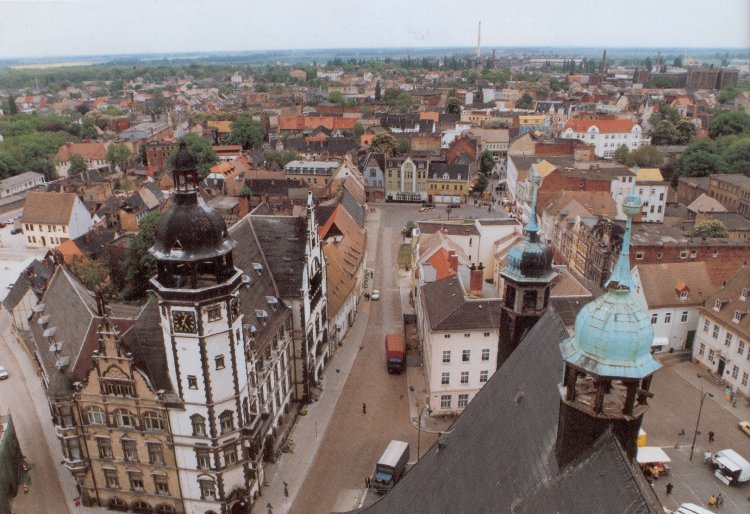 Leopold, Prince of Anhalt-Köthen hired Bach to serve as his Kapellmeister (director of music). Prince Leopold, himself a musician, appreciated Bach's talents, paid him well, and gave him considerable latitude in composing and performing. The prince was Calvinist and did not use elaborate music in his worship; thus, most of Bach's work from this period was secular, including the Orchestral Suites, the Six Suites for Unaccompanied Cello and the Sonatas and partitas for solo violin. The well-known Brandenburg Concertos date from this period. Bach composed secular cantatas for the court such as the Die Zeit, die Tag und Jahre macht, BWV 134a.
On 7 July 1720, while Bach was abroad with Prince Leopold, Bach's wife Maria Barbara, the mother of his first seven children, suddenly died. The following year, the widower met Anna Magdalena Wilcke, a young, highly gifted soprano 17 years his junior, who performed at the court in Köthen; they married on 3 December 1721. Together they had 13 more children, six of whom survived into adulthood: Gottfried Heinrich, Johann Christoph Friedrich and Johann Christian, all of whom became significant musicians; Elisabeth Juliane Friederica (1726–81), who married Bach's pupil Johann Christoph Altnikol; Johanna Carolina (1737–81); and Regina Susanna (1742–1809).
Leipzig (1723–50)

In 1723, Bach was appointed Cantor of the Thomasschule at St. Thomas Church (Thomaskirche) in Leipzig, as well as Director of Music in the principal churches in the town, namely the Nikolaikirche and the Paulinerkirche, the church of the University of Leipzig.[28] This was a prestigious post in the mercantile city in the Electorate of Saxony, which he held for 27 years until his death. It brought him into contact with the political machinations of his employer, the Leipzig Council. The Council comprised two factions: the Absolutists, loyal to the Saxon monarch in Dresden, Augustus the Strong; and the City-Estate faction[clarification needed], representing the interests of the mercantile class, the guilds and minor aristocrats. Bach was the nominee of the monarchists, in particular of the Mayor at the time, Gottlieb Lange, a lawyer who had earlier served in the Dresden court. In return for agreeing to Bach's appointment, the City-Estate faction was granted control of the School, and Bach was required to make a number of compromises with respect to his working conditions. Although it appears that no one on the Council doubted Bach's musical genius, there was continual tension between the Cantor, who regarded himself as the leader of church music in the city, and the City-Estate faction, which saw him as a schoolmaster and wanted to reduce the emphasis on elaborate music in both the School and the Churches. The Council never honoured Lange's promise at interview of a handsome salary of 1,000 Thaler a year, although it did provide Bach and his family with a smaller income and a good apartment at one end of the school building, which was renovated at great expense in 1732.
Bach's post required him to instruct the students of the Thomasschule in singing and to provide church music at the main churches in Leipzig. Bach was required to teach Latin, but he was allowed to employ a deputy to do this instead. A cantata was required for the church service on Sundays and additional church holidays during the liturgical year, he performed mostly his own compositions. The bulk of these cantatas was composed in his first three years in Leipzig, beginning with Die Elenden sollen essen, BWV 75, first performed in the Nikolaikirche on 30 May 1723, the first Sunday after Trinity. He collected them in annual cycles, five are mentioned in obituaries, three are extant. Most of these concerted works expound on the Gospel readings prescribed for every Sunday and feast day in the Lutheran year. Bach started a second annual cycle on the first Sunday after Trinity of 1724, composing only chorale cantatas, each based on a single church hymn, first O Ewigkeit, du Donnerwort, BWV 20, then works such as Wachet auf, ruft uns die Stimme, BWV 140, Nun komm, der Heiden Heiland, BWV 61, and Wie schön leuchtet der Morgenstern, BWV 1. For other than chorale cantatas, a stanza from a chorale typically forms the concluding movement of a work.
To rehearse and perform these works at Thomaskirche, Bach sat at the harpsichord or stood in front of the choir on the lower gallery at the west end, his back to the congregation and the altar at the east end[citation needed]. He would have looked upwards to the organ that rose from a loft about four metres above. To the right of the organ in a side gallery was the winds, brass and timpani; to the left were the strings. The Council provided only about eight permanent instrumentalists, a source of continual friction with the Cantor, who had to recruit the rest of the 20 or so players required for medium-to-large scores from the University, the School and the public. The organ or harpsichord was probably played by the composer (when not standing to conduct), the in-house organist, or one of Bach's elder sons, Wilhelm Friedemann or Carl Philipp Emanuel.
Bach drew the soprano and alto choristers from the School, and the tenors and basses from the School and elsewhere in Leipzig. Performing at weddings and funerals provided extra income for these groups; it was probably for this purpose, and for in-school training, that he wrote at least six motets, mostly for double choir[citation needed]. As part of his regular church work, he performed motets of the Venetian School and Germans such as Heinrich Schütz, which would have served as formal models for his own motets.
Bach wanted to broaden his composing and performing beyond the liturgy. In March 1729, he took over the directorship of the Collegium Musicum, a secular performance ensemble that had been started in 1701 by his old friend, the composer Georg Philipp Telemann. This was one of the dozens of private societies in the major German-speaking cities that had been established by musically active university students; these societies had come to play an increasingly important role in public musical life and were typically led by the most prominent professionals in a city. In the words of Christoph Wolff, assuming the directorship was a shrewd move that 'consolidated Bach's firm grip on Leipzig's principal musical institutions'. During much of the year, Leipzig's Collegium Musicum performed twice weekly for two hours in the Zimmermannsches Caffeehaus, a Coffeehouse on Catherine Street off the main market square. Many of Bach's works during the 1730s and 1740s were written for and performed by the Collegium Musicum; among these were almost certainly parts of the Clavier-Übung (Keyboard Practice) and many of the violin and harpsichord concertos.
In 1733, Bach composed the Kyrie and Gloria of the Mass in B minor. He presented the manuscript to the King of Poland, Grand Duke of Lithuania and Elector of Saxony, August III in an eventually successful bid to persuade the monarch to appoint him as Royal Court Composer[citation needed]. He later extended this work into a full Mass, by adding a Credo, Sanctus and Agnus Dei, the music for which was almost wholly taken from some of the best of his cantata movements. Bach's appointment as court composer appears to have been part of his long-term struggle to achieve greater bargaining power with the Leipzig Council. Although the complete mass was probably never performed during the composer's lifetime, it is considered to be among the greatest choral works of all time. Between 1737 and 1739, Bach's former pupil Carl Gotthelf Gerlach took over the directorship of the Collegium Musicum.
In 1747, Bach visited the court of the King of Prussia in Potsdam. There the king played a theme for Bach and challenged him to improvise a fugue based on his theme. Bach improvised a three-part fugue on Frederick's pianoforte, then a novelty, and later presented the king with a Musical Offering which consists of fugues, canons and a trio based on the "royal theme," nominated by the monarch. Its six-part fugue includes a slightly altered subject more suitable for extensive elaboration.
The Art of Fugue was written shortly before Bach's death and was finished but for the final fugue. It consists of 18 complex fugues and canons based on a simple theme. It was only published posthumously.
The final work Bach completed was a chorale prelude for organ, dictated to his son-in-law, Johann Altnikol, from his deathbed. Entitled Vor deinen Thron tret ich hiermit (Before thy throne I now appear, BWV 668a); when the notes on the three staves of the final cadence are counted and mapped onto the Roman alphabet, the initials "JSB" are found.
Death (1750)

Bach's health declined in 1749; on 2 June, Heinrich von Brühl wrote to one of the Leipzig burgomasters to request that his music director, Gottlob Harrer, fill the post of Thomascantor and Director musices posts "upon the eventual ... decease of Mr. Bach." Bach became increasingly blind, and the British eye surgeon John Taylor operated on Bach while visiting Leipzig in 1750.
On 28 July 1750 Bach died at the age of 65. A contemporary newspaper reported the cause of death as "from the unhappy consequences of the very unsuccessful eye operation". Some modern historians speculate that the cause of death was a stroke complicated by pneumonia. An obituary was written by his son Emanuel and his pupil Johann Friedrich Agricola at the time. Bach's estate was valued at 1159 Thaler and included five Clavecins, two lute-harpsichords, three violins, three violas, two cellos, a viola da gamba, a lute and a spinet, and 52 "sacred books", including books by Martin Luther and Josephus. He was originally buried at Old St. John's Cemetery in Leipzig. His grave went unmarked for nearly 150 years. In 1894 his coffin was finally discovered and reburied in a vault within St. John's Church. This building was destroyed by Allied bombing during World War II, and in 1950 Bach's remains were taken to their present resting place at Leipzig's Church of St. Thomas.
Bach Flute Scores:
- Flute Sonatas, from BWV 1030 to BWV 1035
- BWV 21: Cantata "Ich hatte viel Bekümmernis"
- BWV 209: Cantata "Non sa che sia dolore"
- BWV 212 (oberture): Cantata "Mer hahn en neue Oberkeet"
- BWV 572: Fantasie in Sol
- BWV 867: Prelude in Si bemol menor
- BWV 997: Laud Suite
- BWV 1013: Flute Partita
- BWV 1038: Trio Sonate in Sol Mayor
- BWV 1039: Trio Sonate for two flutes and continuo
- BWV 1050: Brandemburg Concerto N° 5
- BWV 1044: Concerto for flute, violín and harpsichord
- French Suite N° 5
- BWV 1079: Musical Ofering
- Orchestral SUite N° 2
- BWV 140: Coral-Prelude from "Wachet auf, ruft uns die Stimme"
- BWV 21: Cantata "Ich hatte viel Bekümmernis"
- BWV 209: Cantata "Non sa che sia dolore"
- BWV 212 (oberture): Cantata "Mer hahn en neue Oberkeet"
- BWV 572: Fantasie in Sol
- BWV 867: Prelude in Si bemol menor
- BWV 997: Laud Suite
- BWV 1013: Flute Partita
- BWV 1038: Trio Sonate in Sol Mayor
- BWV 1039: Trio Sonate for two flutes and continuo
- BWV 1050: Brandemburg Concerto N° 5
- BWV 1044: Concerto for flute, violín and harpsichord
- French Suite N° 5
- BWV 1079: Musical Ofering
- Orchestral SUite N° 2
- BWV 140: Coral-Prelude from "Wachet auf, ruft uns die Stimme"